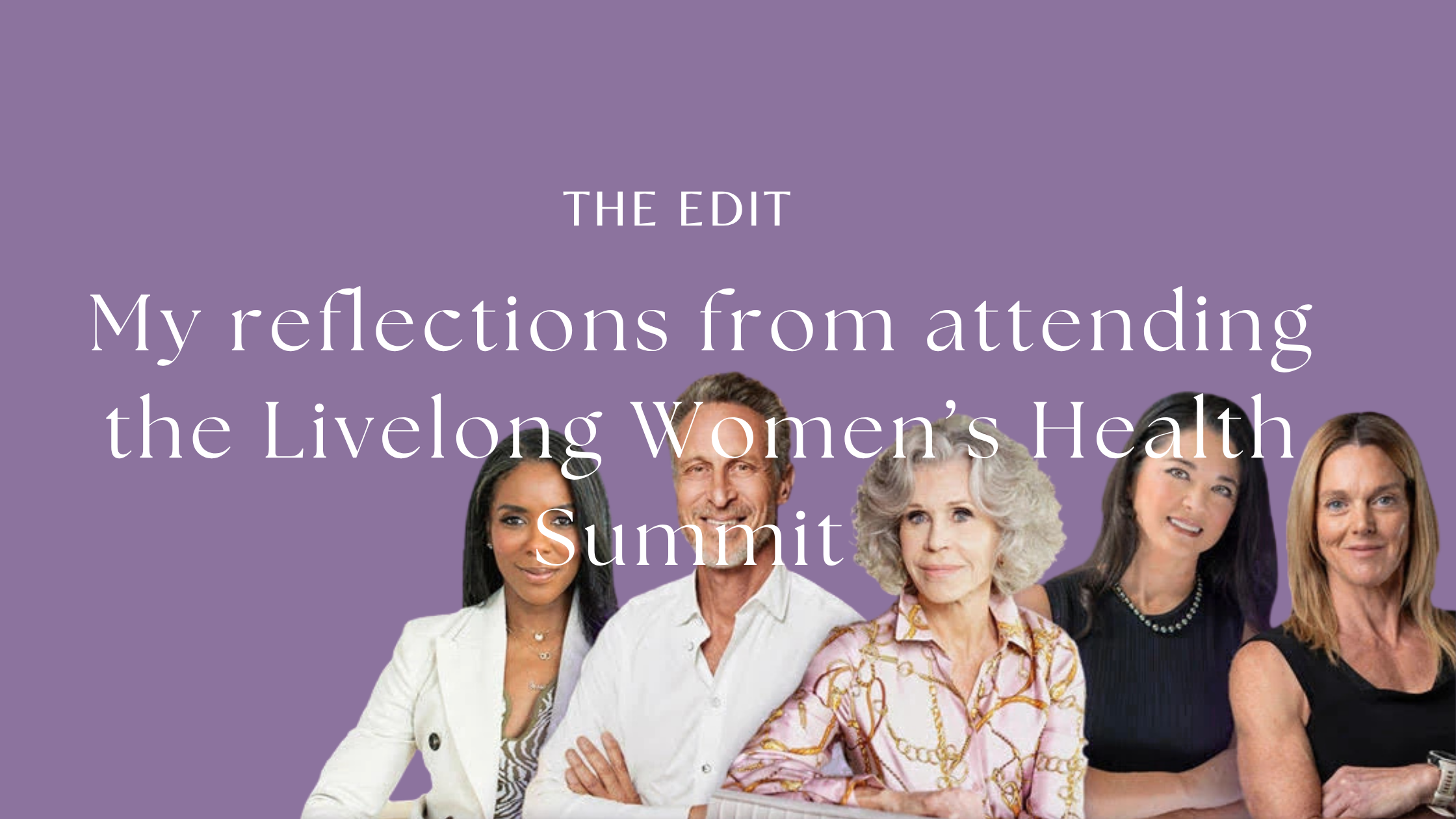
What I learned at the Livelong Women's Wellness Summit – and how it’s changed how I think about midlife.
Here's a statistic that stopped me in my tracks: women are diagnosed with Alzheimer's at almost twice the rate of men. Not because we live longer. But because the drop in estrogen at menopause removes one of the brain's most powerful protective shields, and for decades, almost nobody was talking about it.
I recently attended the Livelong Women's Wellness Summit here in San Francisco, and I left with pages of notes, a long reading list, and an overwhelming sense of conviction. Conviction that midlife does not have to mean decline. That the science now exists to help us not just survive this chapter — but genuinely thrive in it. And that the most powerful thing we can do is educate ourselves and advocate for our own health.
As a trainer whose work centres entirely on women — through pregnancy, early motherhood, and now increasingly through perimenopause and midlife — staying current with the latest research is not optional for me. It is a professional obligation and a personal commitment. The women I work with trust me with their bodies during some of the most significant transitions of their lives, and that trust demands that I show up informed, curious, and willing to evolve how I train and programme as the science does.
The Truth About Perimenopause — And Why It Starts Earlier Than You Think
One of the most grounding moments of the summit came from learning just how long the perimenopause transition actually is. The average age of menopause is 51 — but perimenopause symptoms can begin up to seven years before that. Erratic estrogen fluctuations, brain fog, unexplained weight gain, disrupted sleep, shifts in mood, and resilience can all be part of the biology of transition, and they deserve to be understood and treated accordingly.
What made this land so deeply was understanding why it happens. As we age, the brain gradually loses its ability to regulate the ovaries, leading to unpredictable estrogen secretions over years. Estrogen isn't just a reproductive hormone — it's anti-inflammatory, neuroprotective, and deeply connected to our cardiovascular and metabolic health. When it fluctuates and eventually declines, almost every system in the body feels it.
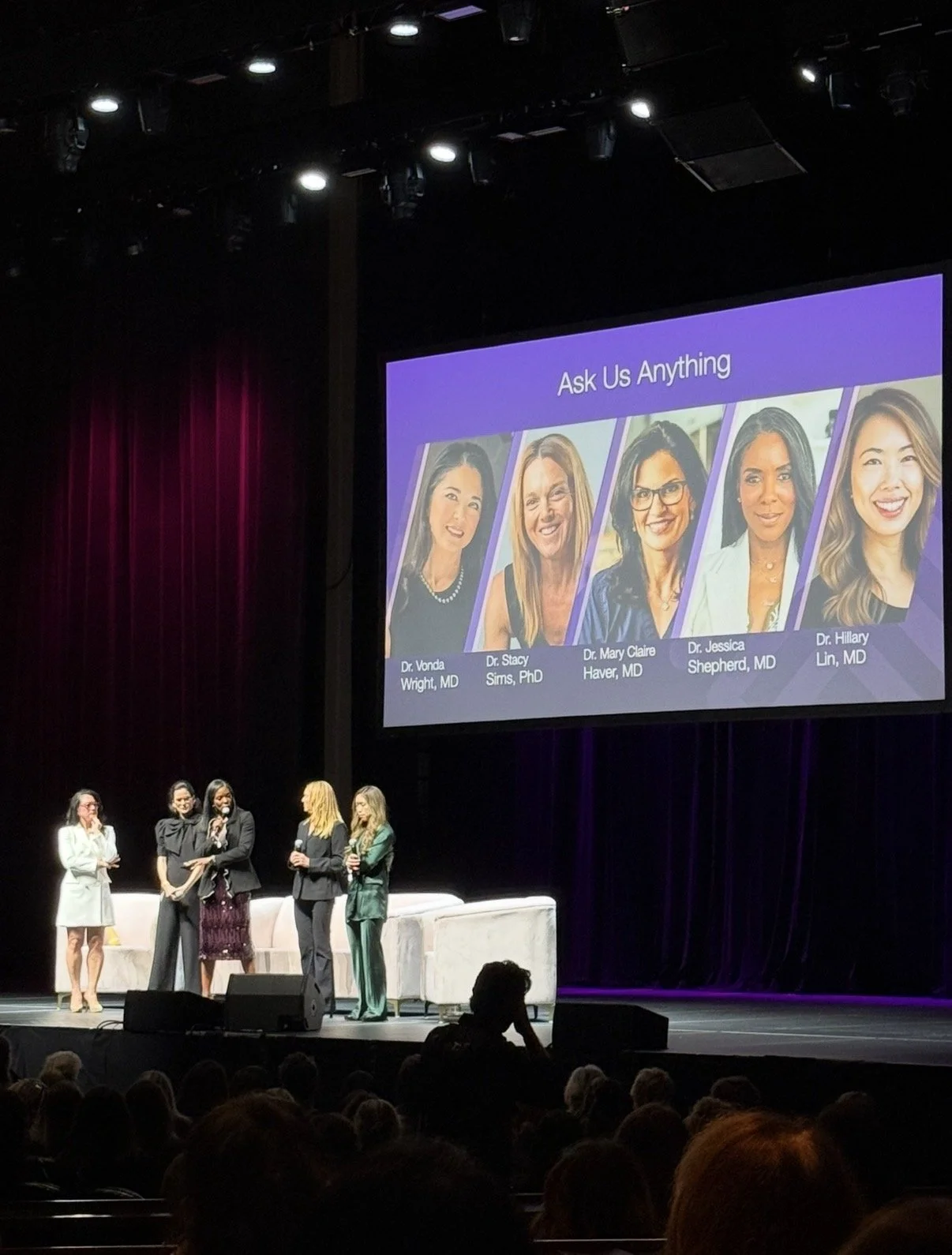
The encouraging news? Less than 10% of women are currently on hormone replacement therapy, despite growing evidence that it is one of the most impactful interventions available. Dr Vonda Wright, an orthopedic surgeon who sees firsthand what happens to women when Estrogen leaves our bodies midlife. Was unequivocal when it came to HRT - HRT is the first line of treatment for women at risk for fracture, cardiovascular disease, and cognitive decline. This is not a fringe view. This is where the science is pointing.
The Decade That Defines Your Future: 45–55
Dr Vonda Wright — one of the most compelling speakers of the summit — referred to the years between 45 and 55 as the critical decade. She named what she called the "Musculoskeletal Syndrome of Menopause" — a cluster of changes that includes bone density loss, joint inflammation, and the accelerated decline of lean muscle mass — all driven largely by estrogen depletion.
The research she cited was both sobering and galvanising. A landmark study published in The Physician and Sportsmedicine showed that women who continued to exercise consistently from their 40s through their 70s were able to preserve their lean muscle architecture — the very thing that keeps us strong, functional, and independent as we age.
Her message was clear: ageing is inevitable, but decline is optional.
Getting a DEXA scan to assess bone density and body composition is more readily available than it has ever been. You can either get a referral from your doctor or pay out of pocket and visit one of the many local labs opening up offering DEXA scans.
Muscle is Medicine — And Strength Training Is Non-Negotiable
If there was one theme that ran through every session at this summit, it was
This: muscle is the currency of longevity.
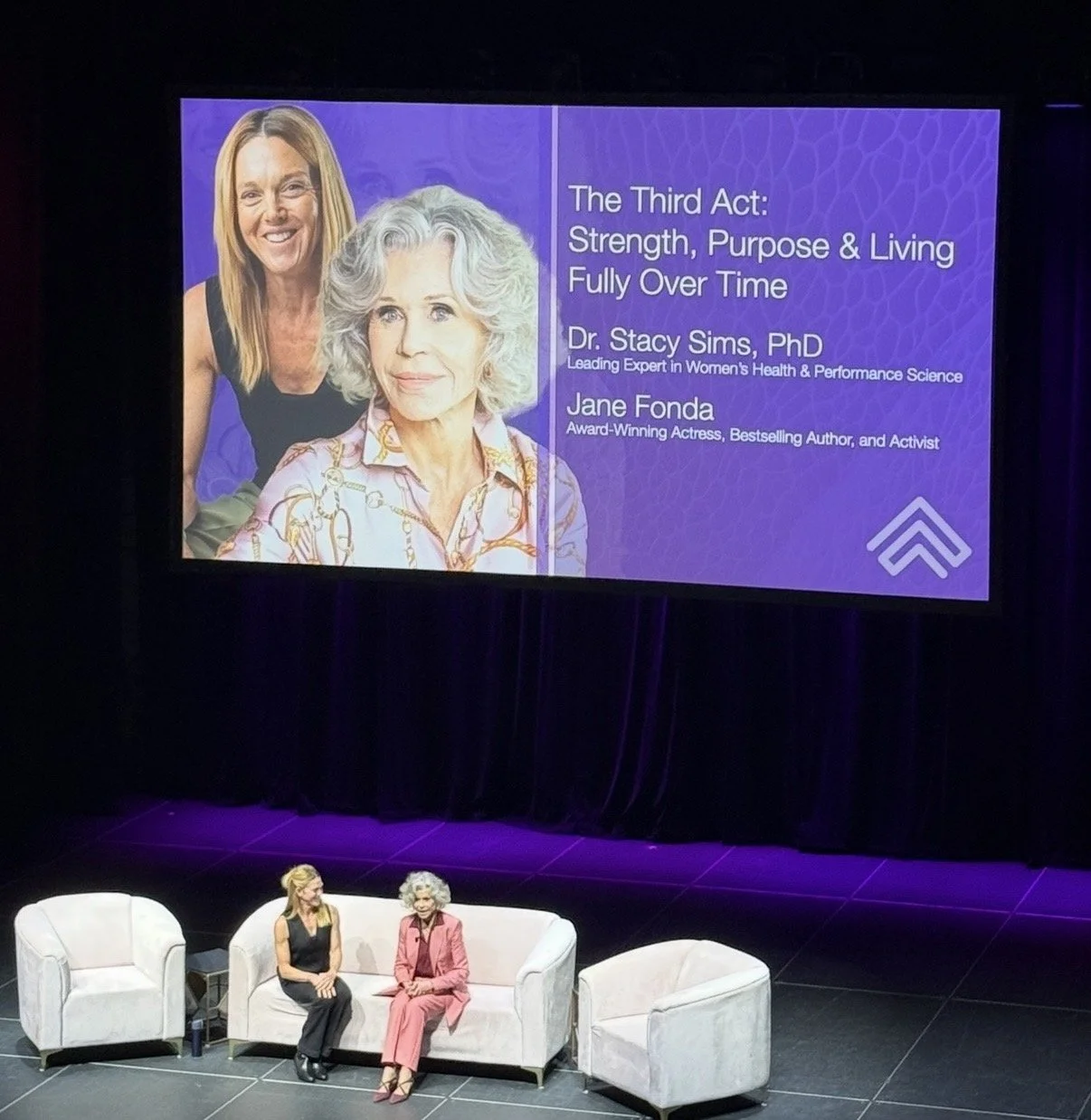
Dr. Stacy Sims — whose research on women's physiology has genuinely shifted how I programme for my clients — reiterated what her work has shown time and again: strength training is not optional as we age, it is essential. The more lean muscle mass we carry, the more efficient our metabolism becomes, meaning our bodies continue to burn calories long after a workout ends. Lean muscle also protects our bones, regulates our blood sugar, reduces inflammation, supports brain health, and keeps us capable and independent for decades to come.
To actually build that muscle, two things have to be in place: progressive overload and adequate protein. Progressive overload simply means continuing to challenge your muscles over time, varying the load, volume, and duration so your body is consistently given a reason to adapt and grow stronger. Alongside that, your body needs sufficient protein from whole food sources to repair muscle tissue and lay down new lean mass. Without enough fuel, even the best training programme will only take you so far.

The Pillars You Can Control Right Now
Beyond hormones and training, the summit reinforced that our daily lifestyle choices compound in ways that are genuinely powerful. Dr Mark Hyman laid out the foundations clearly: movement, sleep, nutrition, stress management, and social connection. These aren't soft suggestions — they are the levers we have the most control over, and they interact with every biological marker that determines how we age.
A few specific insights I'm taking into my own routine:
Nutrition: Aim for 30 grams of protein within the first hour of waking — critical for muscle protein synthesis, blood sugar regulation, and energy. Reduce liquid sugar entirely. An evening fast of around 14 hours (finishing dinner earlier rather than skipping breakfast) appears to be more beneficial for women than morning fasting.
Blood markers worth knowing: Fasted insulin (not just glucose), LDL, blood pressure, and hsCRP for inflammation. Consider asking your doctor for an LPa test — a genetic marker for cardiovascular risk that most women have never heard of, let alone had measured.
Social connection: This one surprised me in how much space it took up across sessions. As our lives get busier and our worlds get smaller, the parts of our brain stimulated by genuine human connection begin to atrophy. Community is not a nice-to-have. It is a biological necessity.
Bash your bones - Nope, not a new Halloween hit, but an approach to helping improve our bone density by adding in jump training for 10 minutes 3x per week. - Jump training on a hard surface, where we are sending an impactful force through our bones, can reverse signs of Osteopenia within 4 months! Tune in to my IG stories this week, where I will be sharing a 10-minute fun jump routine I am doing with my kids after dinner 3x a week.
You Don't Have to Suffer Through This Chapter
The thread running through every talk, every panel, and every conversation at this summit was this: we have been under-researched, under-treated, and under-informed for too long. Less than 1% of health research funding in this country is directed toward women's health (Let that sink in 🤯!) But that is changing — and the science that is emerging is genuinely exciting.
Midlife is not the beginning of the end. With the right training approach, targeted nutrition, informed conversations with your healthcare providers, and a community that supports you — this can be your strongest, most vibrant chapter yet.
I'll be sharing more of what I learned in the weeks ahead. In the meantime, if any of this resonates and you want to know how to start training in a way that is specifically designed for where you are right now, I'd love to support you.
Helpful resources from the summit
Estrogen Matters — book recommended at the summit
The New Perimenopause— on my reading list
The Female Brain— highly recommended for brain health context
DEXA scan — ask your GP or gynaecologist or book directly through places like Bodyspec
Take the free bone health quiz: theunbreakablelifestyle.com/bone-quiz
Dr Mary Claire Haver's website — Great resource for most up-to-date HRT guidelines & advice on how to advocate for yourself & request certain tests.
Midi Health — hormonal health platform for women
**This post is for educational purposes and reflects notes and insights gathered at the Livelong Women's Wellness Summit. Always consult your healthcare provider before making changes to your health routine.**
